Journal
Airbag
A short story. A late-night crash on an empty highway, and the gap between the driver who walks away and the passenger who doesn't.
July 30, 2026 · 6 min read
- fiction
- short story
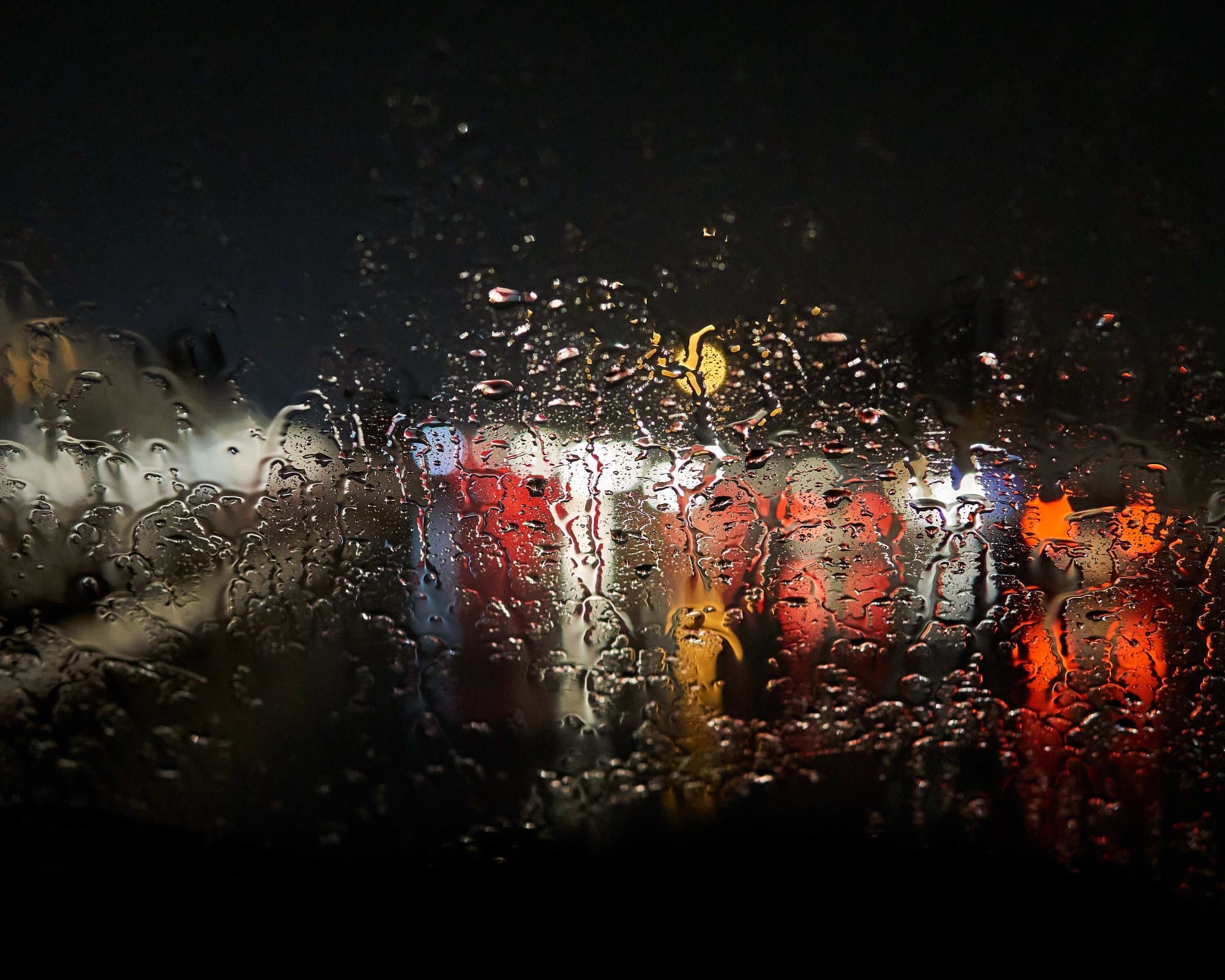
The rain on the windshield didn't fall so much as smear into long, tailing streaks of pale halogen.
Inside the cabin of the BMW, the heating fan hummed on high, blowing dry, lukewarm air against Julian's wet trousers. It was late—past two in the morning—and the two-lane road stretching through the damp countryside felt completely abandoned. Beside him, Rachel was curled into the passenger seat, her chin tucked into the collar of her wool coat, watching the reflection of the dashboard lights bounce off the dark side window.
They hadn't spoken in twenty miles. It wasn't a fight so much as a quiet, suffocating erosion—the kind of silence that builds after months of small misunderstandings.
Julian tightened his hands on the leather steering wheel. The car was heavy, solid, and fast—a piece of precision German engineering designed to make 80 miles an hour feel like standing still. He liked the speed. It was the only thing that felt clean, the only thing that drowned out the steady, humming anxiety that seemed to follow him everywhere he went.
Then, out of the blackness, the world collapsed.
Under the unlit overpass, an eighteen-wheeler—a massive, eight-axle juggernaut—had lost traction on the wet asphalt. The tractor had turned violently into its own trailer, jackknifing sideways across both lanes to form an immovable wall of rusted iron, corrugated steel, and sliding tires.
"Julian—"
Rachel's voice wasn't a scream; it was a tiny, airless gasp.
Julian slammed his foot onto the brake pedal. The ABS pulse rattled through the floorboards like a machine gun. The tires bit into the slick asphalt, but kinetic energy doesn't care about human panic. The fast German car slid forward on a cushion of water, turning into a two-ton sled drifting toward the trailer's steel underbelly.
In that fraction of a second, time didn't slow down—it shattered. Julian saw the rusted rivets on the side of the truck, the smell of burnt rubber pouring through the vents, and a sudden, terrifying clarity: This is the end of the tape. This is where it stops.
Then came the flash.
A violent, deafening explosion detonated inside the dashboard—a sound like a 12-gauge shotgun firing inside an enclosed closet. A thick, acrid cloud of white chemical dust exploded into the cabin, smelling intensely of scorching plastic and gunpowder.
A heavy canvas pillow erupted from the center of the wheel, meeting Julian's face at two hundred miles per hour. Metal crumpled like wet cardboard. Glass turned into a million tiny diamonds.
And then, total, suffocating stillness.
Julian opened his eyes.
The world was suspended in a dense, glowing fog of white powder, illuminated by the rhythmic, amber pulse of a single surviving hazard light. High above his head, the high-pitched tone of a ruined horn vibrated endlessly through the bent frame.
He took a ragged breath. The chemical dust burned his throat, making him cough—a raw, convulsive violent hack.
He looked down at his arms. They were resting in his lap. He wiggled his fingers. He flexed his knees. He pressed his knuckles against his ribs. Nothing was broken. There was no blood. The steering column had stopped three inches from his chest. The heavy nylon airbag hung deflated over the wheel like a spent parachute.
He was completely, miraculously unhurt.
A sudden, terrifyingly potent wave of heat surged from his belly straight up into his chest. It wasn't just relief; it was a violent, electric shock of adrenaline. The sky hadn't fallen. The metal hadn't crushed him. He had stepped right up to the ragged edge of the world—into the deep, deep freeze of absolute nothingness—and had been kicked right back out into the light.
He was alive.
"Rachel!" he blurted out, his voice cracked and high-pitched.
He turned to the passenger seat. The passenger side door was buckled inward, the frame twisted into an unnatural angle. Rachel was sitting upright, but her head was tipped forward, her eyes squeezed shut in absolute agony. Her hands were clamped tightly around the back of her neck.
"Rachel? Are you okay? Can you move?"
"My neck," she gasped, her voice barely a whisper, trembling with a sound that tore Julian's stomach open. "Julian... my neck. Don't touch me. It hurts... God, it hurts."
Whiplash. The impact had thrown her head violently forward before her seatbelt locked, snapping her cervical spine like a whip. She was breathing in short, shallow hitches, tears cutting clean lines through the white dust on her cheeks.
"Stay still. Just stay still," Julian stammered.
He needed to get air. He needed to get out. He shoved his driver-side door with his shoulder. The latch groaned, yielded, and popped open.
Julian fell out of the car onto his knees in the cold mud of the shoulder.
The freezing rain hit him instantly, washing the bitter chemical powder from his face and soaking through his shirt. He stood up on shaking legs and looked back at the wreckage.
The front left quarter of the BMW was completely erased. The engine block had been shoved sideways, the hood curled up like a sheet of foil. Two inches to the right, and the steering wheel would have driven straight through his sternum.
He looked at the twisted metal, then up at the pitch-black sky pouring rain into his open eyes.
A wild, hysterical sound bubbled up in his chest—a laugh that turned into an electric, manic yell.
He didn't just feel spared; he felt reborn. The mundane, suffocating weight of his existence—the quiet misery, the dull dread of the modern world, the endless routine—was instantly incinerated. In an interstellar burst of pure, terrifying luck, he had been pulled from the wreckage. He felt vast, indestructible, like a cosmic entity returned to earth with a divine mandate.
He pulled off his wet jacket, threw it into the mud, and began running down the empty, rain-slick highway.
He raised his arms to the black clouds, yelling at the top of his lungs into the roaring wind:
"I'm back! I'm alive! My life has started again today!"
His voice echoed off the concrete underpass, absurd and triumphant. He ran thirty paces down the asphalt, laughing hysterically, feeling like a god who had just conquered the universe.
Then, from behind him, a low, wretched moan carried through the rain.
Julian stopped dead in his tracks.
He turned around. Thirty yards back, the wrecked BMW sat silent in the dark, its ruined front end steaming in the cold night air. Inside the cabin, framed by the shattered window, Rachel was still sitting motionless, clutching her neck, sobbing quietly into the dust.
The manic heat in Julian's blood vanished in an instant, replaced by a cold, sickening sink in his gut.
He slowly walked back to the car, his shoes squelching softly in the wet mud.
He leaned against the cold metal of the driver's door and looked inside. The deflated airbag was dripping with rainwater that was leaking through the buckled roof. On the dashboard, a tiny electronic sensor was still humming—a mindless, indifferent circuit that had fired a chemical charge in thirty milliseconds because the car's computer was programmed to save its occupant.
There was no miracle here. No cosmic hand had reached down from the stars to choose him. A nylon bag had deployed. A piece of consumer safety technology had absorbed the physics of his own speed.
He had walked away completely fine. Rachel was broken in the passenger seat.
Julian reached his trembling hand through the window and gently touched the hem of Rachel's sleeve. She didn't look at him. She just kept her eyes closed, shivering in the cold air, holding her neck, entirely isolated in her pain.
In the far distance, the high, warbling cry of approaching sirens began to bounce off the wet trees. Julian pulled his hand back, leaned his forehead against the cold, wet glass of the window, and waited.