Journal
The Broken Strings
A short story. A busker playing it safe on a cold Dublin street meets a stranger who plays like there's no tomorrow.
July 30, 2026 · 4 min read
- fiction
- short story
For Glenn
The damp Dublin chill had settled deep into the cobblestones of Grafton Street, the kind of cold that turns fingers stiff and pulls the warmth straight out of a wooden instrument.
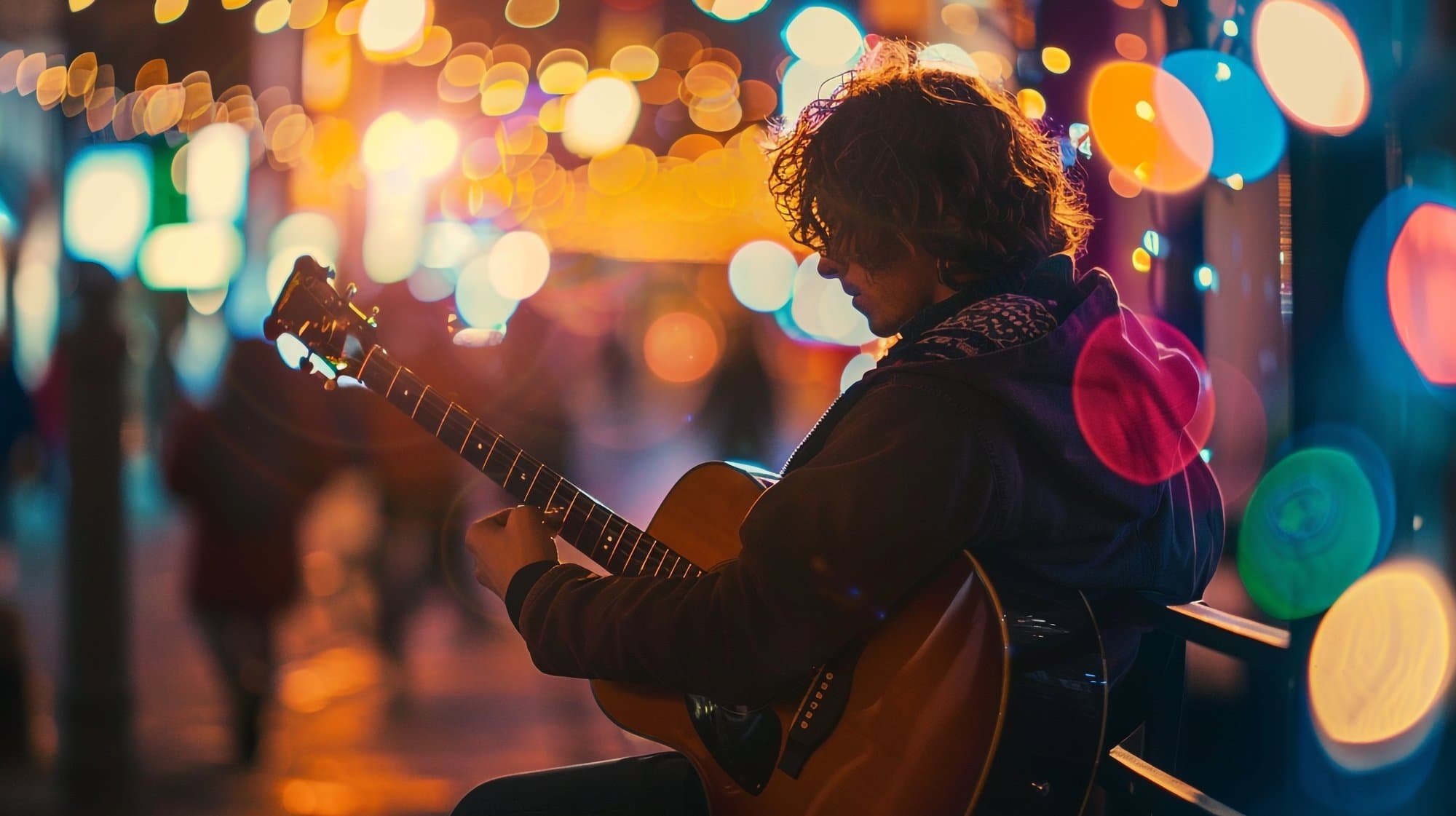
I was standing outside a darkened shop window, strumming a neat, polite progression on my acoustic guitar. Passersby rushed past wrapped in heavy coats, their faces buried in scarves, oblivious to the music. I was playing it safe—sticking to gentle chords, keeping my voice restrained, terrified that if I really let go, if I really pushed into the raw emotional meat of the song, I'd just sound foolish to a street full of strangers. I was hiding behind the melody.
"You're playing like you're trying not to wake a baby," a voice rasped from the shadows nearby.
I stopped playing, my fingers freezing on the fretboard. Sitting on an overturned wooden crate a few feet away was an older man. He wore a faded, heavy woolen coat, his unruly, wild red-and-silver hair peeking out from beneath a battered flat cap. His face was lined with the kind of deep grooves that only come from decades of laughter, late nights, and bitter cold wind. Leaned against his knee was an ancient acoustic guitar—the top worn down to the bare wood, marked with a gaping, famous hole near the soundhole where decades of aggressive strumming had literally eaten through the timber.
"Excuse me?" I asked, wiping my cold hands on my jeans.
"You're playing it safe, lad," the man said, his voice a warm, gravelly Irish purr. He pointed a calloused finger at my chest. "You've got something bottled up in there, but you're afraid to let the street hear it. Why bother standing out here in the freeze if you're just going to whisper?"
"People don't want to be shouted at," I muttered, looking at the empty guitar case at my feet. "They're just trying to get home."
The man let out a soft, hearty bark of a laugh and stood up. He picked up his battered guitar, stepping into the dim amber light of the streetlamp.
"They don't want to be entertained, lad. They want to be moved," he said, adjusting the strap over his shoulder. "If you've got something to say to them—to anyone—you don't wait for the right moment. You don't wait until you're comfortable. You give it to 'em now. Raw. Right out of the gut."
Without another word, he struck his guitar.
It wasn't a gentle strum; it was a thunderclap. His right arm moved like a piston, battering the worn wood of his instrument. The sound echoed off the brick buildings, sharp and electrified without an amp in sight. He leaned into the microphone of the open air, his eyes squeezed shut, and sang.
It wasn't pristine, polished singing. It was a soaring, desperate roar—a voice full of crackle, passion, and uncompromising truth. He sang like his life depended on every syllable, pouring every ounce of longing and urgency into the night air. People actually stopped. Commuters pulled their eyes away from their phones. A crowd began to form in a quiet, spellbound semicircle around the heat of his voice.
He pushed the song harder, driving the rhythm until—SNAP.
The top E string snapped with a sharp crack, whipping through the air. He didn't even flinch. He didn't miss a beat. He just dug in deeper, hitting the remaining five strings with even more violent intensity, wringing every drop of catharsis from the instrument until the final, breathless chord hung in the frosty air.
The crowd erupted into applause, coins showering into his open case.
The man took a long, slow breath, a faint, knowing grin tugging at the corner of his mouth. He unslung his guitar and looked over at me, his blue eyes sharp and bright under the streetlamp.
"Five strings are more than enough to tell the truth," he said quietly, nodding toward my hands. "Don't leave anything in the tank. Play it like it's the last chance you'll ever get to be heard."
I blinked, taking in his words, feeling a sudden flare of heat in my chest that had nothing to do with the weather. When I looked up a second later to reply, he was already stepping back into the shadow of the alleyway, his battered guitar case in hand, dissolving into the Dublin drizzle as quickly as he'd appeared.
I looked down at my own guitar. I took a deep breath, adjusted my grip, and stepped closer to the edge of the curb.
I threw my head back, dug my plectrum into the steel, and finally began to sing—not to the street, but to the world—with everything I had left.