Journal
The Roads We Don't Choose
On reversal, recognition, and the unexpected paths that change us.
July 10, 2026 · 4 min read
- life
- leadership
- writing
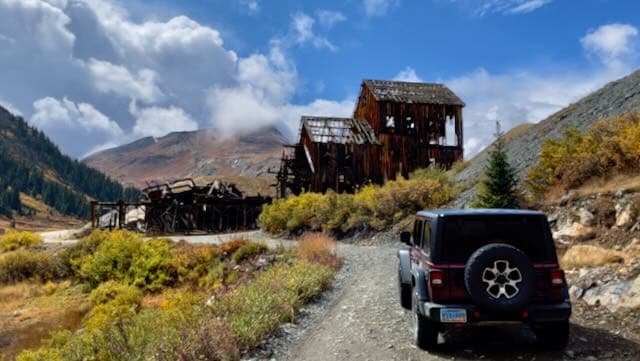
There's a kind of trip I like to plan. Routes marked, stops chosen, fuel and water accounted for. I've built whole systems around that instinct — it's most of what I do for a living. Plan the day, keep it small, finish what you start.
And then there's the other kind of trip. The one you didn't plan. The detour that becomes the route.
Most of what has actually shaped me came from the second kind.
The plan, and then the road
On paper, the first stretch of my career moved the way careers are supposed to move. Philadelphia kid, telecommunications work, bigger companies, more responsibility. By my early thirties I was an Assistant Vice President at a bank, doing engineering work I was good at, on a road that looked like it went somewhere specific.
Then it didn't.
I've been unemployed. I've sat with the particular quiet of a career that has stopped moving, when the title you worked for belongs to a previous version of your life and nothing about the next version has introduced itself yet. I'd like to tell you I handled that stretch with wisdom and perspective. Mostly I just handled it. Uncertainty doesn't feel meaningful while you're in it. It feels like uncertainty.
What came next was not a corner office. It was a blue shirt in an Apple Store.
What the turn taught me
Here's the thing nobody tells you about reversal: the lesson almost never arrives with it. The lesson comes later — sometimes years later — when you finally see what the turn actually did to you.
Retail did something the bank never had. It put me shoulder to shoulder with people I would never have met on the corporate track — different ages, different backgrounds, different reasons for being there — and it made me responsible for helping them do difficult work in front of customers all day long. I eventually led technical teams of thirty and forty people. I learned that a frustrated customer and a struggling technician usually need the same thing: someone to make the situation clear, take ownership of it, and stay human while doing it.
I didn't know it then, but I was learning the job I have now.
Literature has a name for the unexpected turn — peripeteia — and another for the recognition that follows it — anagnorisis. I went most of my life without those words. But when I finally ran into them, I recognized the pattern immediately, because I had lived it more than once. The turn comes first. The understanding comes later, if it comes at all. The distance between the two is where most of a life happens.
The long way to here
The road since then hasn't been straight either. It ran through account management — years of sitting with clients, hearing what service feels like from the other side of the ticket — and eventually into leading service operations. Each move looked lateral or backward to somebody. Each one turned out to be load-bearing.
The same pattern runs through everything outside of work. Becoming a husband. Becoming a father, four times, and then watching four children become adults with roads of their own. None of that went according to any plan I could have written, and all of it changed how I see people — what they carry, what they don't say, how much grace a hard day deserves.
Somewhere in there I started writing fiction, and it took me an embarrassingly long time to notice what the novels were about: people on roads they didn't choose, learning who they're becoming. I started building tools for the same reason — small systems that help a person take something messy and give it shape. Writing and building are both ways of making meaning out of experience. So, it turns out, is leadership.
Still driving
I spend a lot of time now on long roads through Colorado and the Pacific Northwest — mountain passes, ferry towns, coastal highways. Part of it is the landscape. But part of it, I think, is that the road is honest about something we mostly pretend isn't true: you don't control the route nearly as much as you think you do. Weather moves in. The pass closes. You take the other road.
I'm suspicious of stories where every setback turns out to be a gift. Some of mine weren't. Some were just hard, and the only thing they produced was the next morning. But I've come to believe this much: the moments that define us are rarely the ones we planned. They're the ones that ask us to become someone new — and the recognition, when it finally arrives, doesn't end the journey. It just adjusts the map.
I'm still adjusting mine.
Who are you becoming?