Journal
The Underdog ADVNTR: Because the Crisis Is Real
An overview of why this project exists — and why doing nothing is no longer acceptable.
July 21, 2026 · 5 min read
- community
- animal welfare
- systems
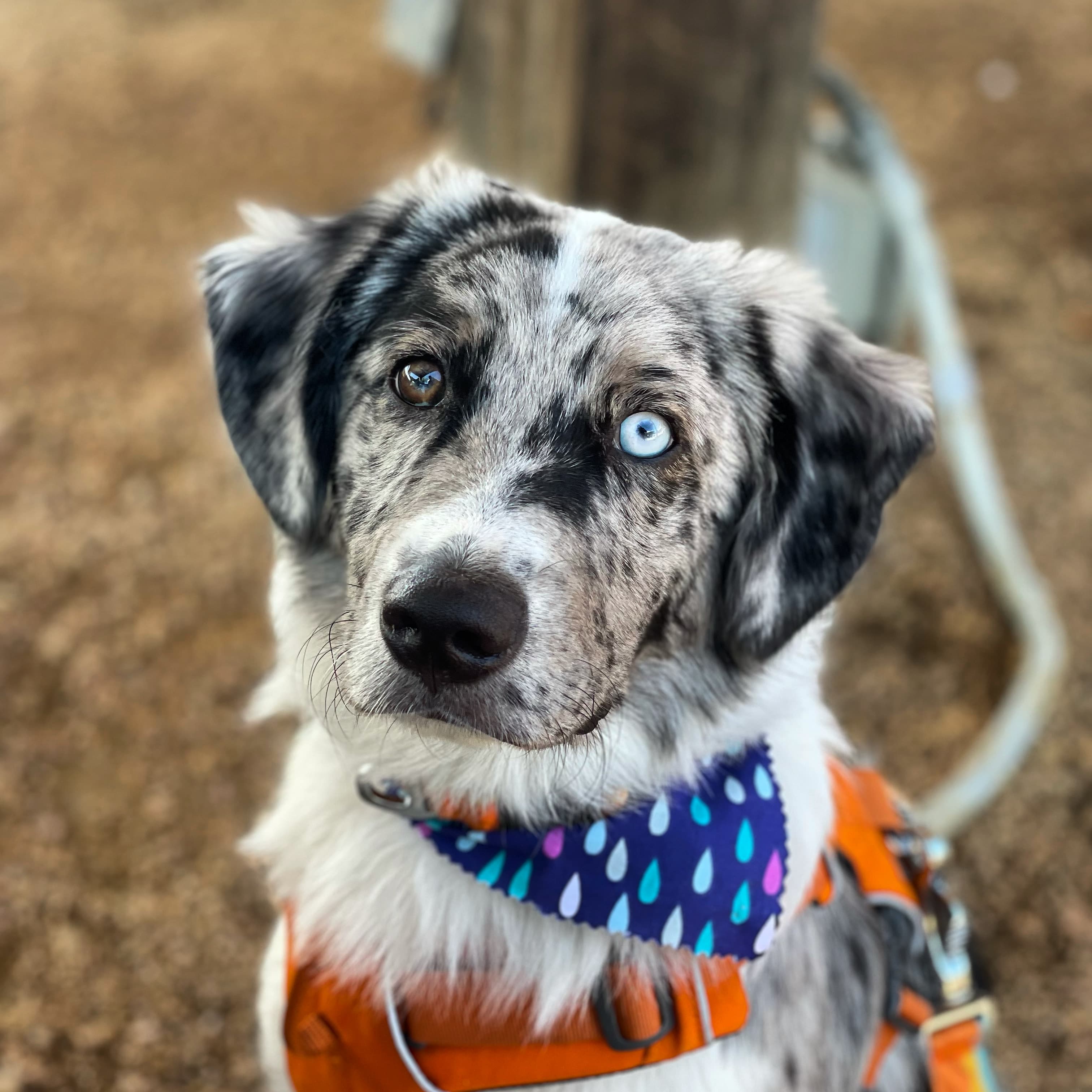
There is an animal welfare crisis unfolding in plain sight. I see it every day in the social-media posts from shelters and rescues asking for help: a kennel is full; a dog needs a foster by the end of the day; a litter of kittens needs placement; someone has run out of time.
I see people respond, too. They share the post. They tag friends. They write that they wish they could help. And then, too often, the post slips away without a clear resolution — no confirmed foster, no committed adopter, no update that the animal is safe. We may never learn what happened next.
That uncertainty carries its own weight. It is heavy for the shelter and rescue workers making those public pleas after exhausting every other option. It is heavy for the volunteers and advocates who keep searching for the posts because they cannot ignore them. And it is heavy for anyone who has ever stared at a screen, wanting to do something useful for an animal they have never met, while not knowing how to bridge the distance between concern and action.
Behind each of those posts is a system under enormous strain: too many animals entering, too few foster homes, too few adopters, too little funding, too little space, and never enough time. The people doing this work are not failing because they do not care. They are carrying a problem that is bigger than any one shelter, rescue, volunteer, or community can solve alone.
And while we debate, delay, or look away, animals pay the price.
They wait in overcrowded kennels. They deteriorate under the stress of confinement. They are surrendered by families facing housing insecurity or financial hardship. They are transferred again and again as organizations search for open space. And, in far too many cases, they die in care or are euthanized — not because their lives did not matter, but because the system ran out of capacity to give them another path.
That is the reality behind The Underdog ADVNTR.
The crisis, by the numbers
- 5.8 millionDogs and cats entered U.S. shelters and rescues in 2025.
- 4.2 millionDogs and cats were adopted in 2025 — a meaningful number, but not enough to relieve the system-wide pressure.
- 597,000Dogs and cats were euthanized in U.S. shelters in 2025.
- 757,000Dogs and cats had a non-live outcome in 2025, including euthanasia, death in care, or being lost in care.
- 13,471Animal-sheltering organizations operate across the United States. Shelters receive 84% of community intakes; rescues receive the other 16%.
Sources: Shelter Animals Count 2025 Annual Data Report; figures are national estimates for dogs and cats.
These are not abstract numbers. They are individual animals — each one with a life, a temperament, a story, and the capacity to matter deeply to someone.
The numbers also reveal a harder truth: adoption alone cannot carry this work. Shelters are not simply places where animals wait to be chosen. They are the final pressure valve for failures upstream — unaffordable veterinary care, housing that excludes pets, unplanned litters, inadequate access to spay/neuter services, lost pets that cannot get home, and a public system too fragmented to respond at the scale required.
This is not a shelter-worker problem
It is easy to see a tragic outcome and direct anger toward the people closest to it: the shelter staff member, the rescue coordinator, the volunteer, the foster who could not take one more animal.
But those people are often the ones absorbing the consequences of the crisis most directly.
They are the ones answering surrender calls from people who have nowhere else to turn. They are the ones trying to create room when every kennel is full. They are the ones arranging transport, writing adoption profiles, begging for foster homes, and carrying the emotional weight of decisions no one should have to make.
The problem is not a lack of compassion.
The problem is that compassion, without enough coordination, capacity, visibility, and support, can only stretch so far.
Why I am building The Underdog ADVNTR
I am building The Underdog ADVNTR because the status quo is not good enough.
Right now, it is a one-person effort. I am building it slowly and deliberately because I believe there has to be a more practical path from seeing a plea for help to taking meaningful action. The goal is to connect people to the problem and to each other; to make it easier to understand where help is needed; and to support the kind of shared action that can keep more animals out of crisis and move more of them toward safety, care, foster homes, reunification, and adoption.
This is not a promise that one person or one project can solve a national emergency overnight. I cannot.
But large problems do not become solvable by waiting for a perfect, centralized answer. They become solvable when more people decide that the work belongs to all of us — and when we build better ways for them to participate.
The Underdog ADVNTR is grounded in that belief: that information should lead to action, that good people should be easier to find and support, and that every improvement in the path from crisis to care can mean a life spared from suffering.
What action can look like
Not everyone can adopt. Not everyone can foster. Not everyone can donate.
But every community has a role to play.
You can choose adoption when it is right for your household. You can foster for a weekend, a month, or until an animal finds a home. You can volunteer time, share an animal's story, reunite a lost pet with its family, support a local rescue, help a neighbor keep their pet during a difficult season, or advocate for the resources your local shelter needs.
None of these actions is small to the animal whose future changes because of it.
And none of us should have to carry the entire crisis alone.
The work ahead
The crisis is real. Animals are suffering. Animals are dying. Animals are being euthanized in a system that too often has no remaining capacity, no remaining time, and no remaining options.
That should disturb us.
It should also move us.
The Underdog ADVNTR is my effort to turn that discomfort into meaningful action — to build something useful, honest, and hopeful in the space between the scale of the problem and the individual lives at stake.
Because every animal deserves more than a number.
And because doing nothing is still a decision.